 Dubai Head Office
 Made in Pakistan
 Quality You can Trust
 Whatsapp Us
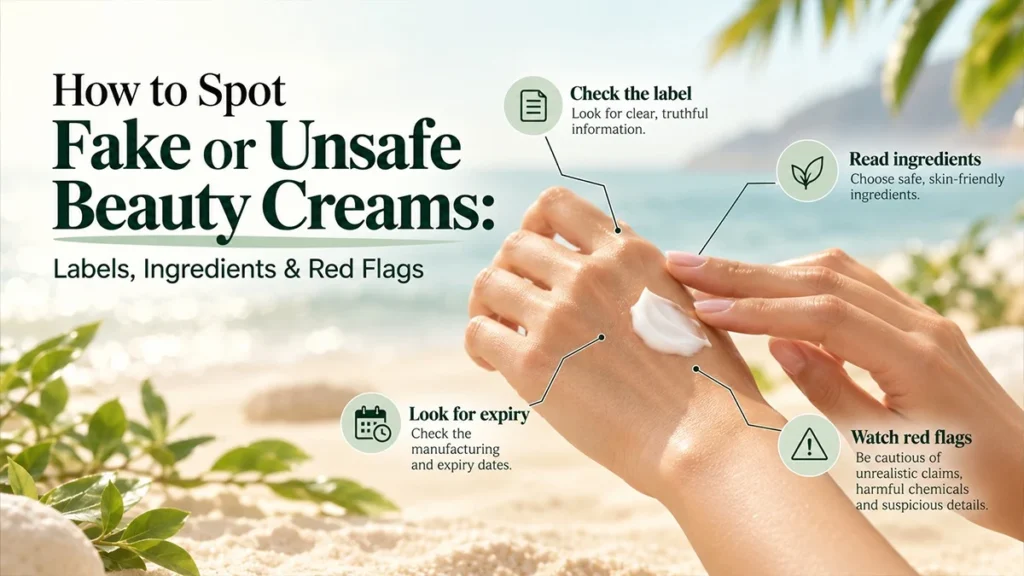
Beauty creams are everywhere: on shop counters, in WhatsApp groups, on TikTok and at roadside stalls. Many promise dramatic results in a few days. But behind some of these jars is a serious problem. Health authorities around the world, including the World Health Organization, have warned about skin creams containing mercury, and dermatologists regularly see patients harmed by creams secretly mixed with strong steroids.
This guide will help you tell the difference between a trustworthy product and a risky one, before it reaches your face.
Why Unsafe Creams Are So Common
Demand for quick results is high, and some sellers take advantage of it. Unbranded or relabelled creams are cheap to produce, easy to sell online, and hard to trace. Because they often deliver a fast, visible change in the first few weeks, buyers may not realise the damage until much later.
The Hidden Dangers
Mercury
Mercury has been found in some skin-lightening creams because it can suppress pigment production. It is toxic. Long-term exposure through the skin has been linked to kidney damage, skin rashes, discolouration and nervous system problems. It can also affect other people in the household. Under the international Minamata Convention, many countries have moved to ban mercury-added cosmetics above trace levels.
Hidden Steroids
Potent topical steroids are prescription medicines. When mixed into beauty creams without disclosure, they may make skin look clearer and lighter at first. Over time, misuse can lead to thinning skin, stretch marks on the face, visible blood vessels, severe acne and dependency, where the skin flares badly when the cream is stopped.
High-Strength Hydroquinone
Hydroquinone is a pigment-reducing ingredient that is restricted or prescription-only in many countries. Unsupervised, long-term use of high concentrations can cause irritation and, in some cases, a bluish-grey darkening of the skin.
The 10-Point Label Checklist
Before you buy any cream, check the box and jar for the following:
- Brand name and manufacturer details. A genuine product clearly states who made it.
- Full ingredient list. If there is no ingredient list, do not put it on your face.
- Batch or lot number. This allows the manufacturer to trace the product.
- Manufacturing and expiry dates. Missing or scratched-off dates are a warning sign.
- Country of origin. Legitimate products state where they were made.
- Contact information. A website, email, social media or phone number you can actually reach.
- Directions and warnings. Such as “For external use only” and patch test advice.
- Quality packaging. Blurry printing, spelling mistakes and poorly fitted lids suggest counterfeits.
- Sealed product. The jar should come with a seal or tamper-evident packaging.
- Realistic claims. Be sceptical of phrases like “permanent results in 3 days”.
Ingredient Names That Deserve a Closer Look
Mercury is rarely listed honestly, but it sometimes appears under names like mercurous chloride, calomel, mercuric or mercurio. Be cautious with creams listing strong steroids such as clobetasol, betamethasone or dexamethasone, unless they have been prescribed by a doctor for a medical condition.
Warning Signs After You Start Using a Cream
- Burning, stinging or itching that does not settle
- Unusually fast, dramatic lightening within days
- Skin that becomes thin, shiny or shows small visible veins
- New acne or rashes, especially around the mouth and nose
- Skin that worsens severely as soon as you stop using the product
If you notice any of these, stop using the product and consult a dermatologist. Take the jar with you so the doctor can see what you have been using.
Where You Buy Matters
Buy from the brand’s official website, verified social media accounts, or authorised retailers and pharmacies. Be careful with extremely cheap prices on well-known products; counterfeiters often copy popular packaging. If you are a retailer, source directly from the brand or its approved distributors.
What a Responsible Brand Looks Like
Trustworthy brands are transparent. They publish their ingredient lists, explain how their products are made, and are reachable when customers have questions. At Vidley Cosmetics, every product page lists its key ingredients and details, and our approach to formulation and checks is explained on our Quality & Testing page. You can also learn more about us or read common questions on our FAQs page.
For example, the full ingredient list of Vidley Gluta Gold is shown openly on its product page, from Alpha Arbutin and Glutathione to Hyaluronic Acid and Vitamin E, so you know exactly what you are applying.
Always Patch Test
Even safe, well-made products can occasionally irritate sensitive skin. Apply a small amount behind the ear or on the inner forearm, wait 24 to 48 hours, and check for redness or itching before using it on your face.
The Bottom Line
Your skin deserves more than a jar with a flashy promise. Read the label, question claims that sound too good to be true, buy from trusted sources, and choose brands that are open about what goes into their products. Healthy-looking skin takes time, and no result is worth risking your health.
CTA: Choose transparency. See how Vidley approaches quality and testing.
Frequently Asked Questions
How can I tell if a beauty cream contains mercury?
You usually cannot tell by looking. Avoid products without a full ingredient list, and be wary of names like calomel or mercurous chloride. Buy only from verified brands and sellers.
Why do some creams work very fast and then stop?
Some unregulated creams contain hidden steroids, which can show quick results but cause skin damage and rebound flare-ups over time.
What should I do if a cream irritates my skin?
Stop using it immediately, rinse gently with water, and consult a dermatologist if irritation continues.
Is a cheap cream always fake?
Not always, but prices far below the normal market rate for a known brand are a common sign of counterfeits.