 Dubai Head Office
 Made in Pakistan
 Quality You can Trust
 Whatsapp Us

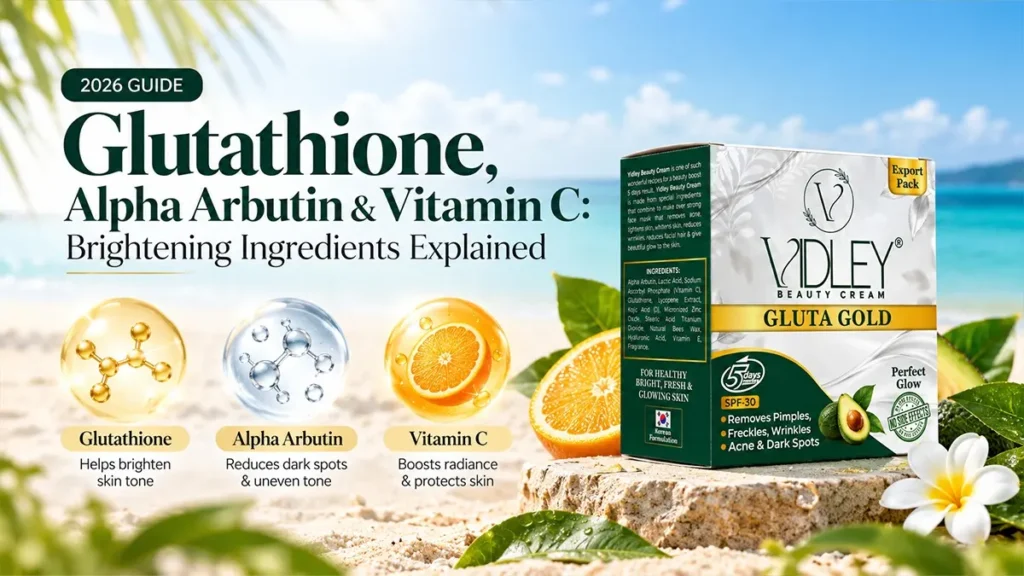
Walk into any beauty store in Dubai, Abu Dhabi or Riyadh and you will see the same words on almost every cream: Glutathione, Alpha Arbutin, Vitamin C. These ingredients have become the headline names of brightening skincare in 2026, but very few people actually know what each one does, how they work together, or what realistic results look like.
This guide breaks down the most popular brightening ingredients in plain language, so you can read a label with confidence and choose a cream that suits your skin.
What Does “Brightening” Really Mean?
Brightening is not about changing your natural skin colour. It is about helping skin look fresher, more radiant and more even. Most people who search for brightening products are dealing with one or more of these concerns:
- Dark spots left behind after pimples
- Uneven patches caused by sun exposure
- A dull, tired-looking complexion
- Freckles or pigmentation that has become more visible over time
Good brightening ingredients target the appearance of these concerns while keeping skin hydrated and comfortable. Your natural tone stays yours; the goal is healthier-looking skin.
1. Glutathione: The Antioxidant Everyone Is Talking About
Glutathione is an antioxidant that your body produces naturally. In skincare, it is valued for its role in fighting oxidative stress, the kind of daily damage caused by sunlight, pollution and heat. Stressed skin tends to look dull and uneven, which is why antioxidants are central to any brightening routine.
In a topical cream, Glutathione works best as part of a team rather than on its own. When paired with ingredients like Vitamin C and Alpha Arbutin, it helps support a clearer, more radiant-looking complexion over consistent use.
Good to know: Topical Glutathione in a cream is very different from Glutathione injections or high-dose supplements, which should only be considered under a doctor’s supervision.
2. Alpha Arbutin: A Gentle Choice for Dark Spots
Alpha Arbutin is one of the most widely used ingredients for the appearance of dark spots and uneven tone. It works by helping to reduce the activity of tyrosinase, the enzyme involved in producing melanin (the pigment that gives skin its colour).
Why do dermatology-minded brands like Alpha Arbutin? Because it is known for being gentler than harsher alternatives and suitable for regular use by most skin types. It is a popular choice for post-acne marks, which are one of the most common complaints in hot, humid climates.
3. Vitamin C (Sodium Ascorbyl Phosphate): Radiance in a Stable Form
Vitamin C is a classic for a reason. It is a powerful antioxidant that supports a brighter, more luminous look and helps protect skin from environmental stress.
The challenge with pure Vitamin C (L-Ascorbic Acid) is that it can be unstable and irritating for some people. That is why many modern formulas use Sodium Ascorbyl Phosphate, a more stable derivative that is generally gentler on skin while still delivering Vitamin C benefits.
4. Kojic Acid and Lactic Acid: The Supporting Cast
Kojic Acid is derived from fungi used in fermentation and is another ingredient associated with the appearance of a more even skin tone. It is often combined with Alpha Arbutin for a broader approach to dark spots.
Lactic Acid is a mild alpha hydroxy acid (AHA). It helps loosen dull, dead surface cells so fresher skin shows through, and it also helps other ingredients perform better on a smoother surface. Because it is an exfoliant, sun protection becomes even more important when you use it.
5. Hyaluronic Acid and Vitamin E: Hydration Matters
Here is something many people overlook: dehydrated skin never looks bright, no matter how many active ingredients you use. Hyaluronic Acid attracts and holds moisture in the skin, giving it a plump, smooth look. Vitamin E is a nourishing antioxidant that supports the skin barrier and softness.
Together, these ingredients make sure your brightening routine does not leave your skin feeling tight or dry, which is especially important in air-conditioned offices and the dry winter months.
6. Lycopene: The Tomato Antioxidant
Lycopene is the natural pigment that gives tomatoes their red colour. It is a strong antioxidant and adds another layer of defence against environmental stress, supporting the overall glow of the skin.
Why Combination Formulas Work Better
Each ingredient above works in a slightly different way. Some target pigment, some fight oxidative stress, some exfoliate, and some hydrate. A well-balanced cream combines these roles, which is why multi-ingredient formulas are becoming the standard in 2026.
Both Vidley Gluta Gold and Vidley Gold Beauty Cream are built on this idea. Their formulas include Glutathione, Alpha Arbutin, Vitamin C (Sodium Ascorbyl Phosphate), Kojic Acid, Lactic Acid, Lycopene Extract, Hyaluronic Acid and Vitamin E, along with Micronized Zinc Oxide and Titanium Dioxide, with SPF-30 stated on the packaging.
How to Use a Brightening Cream the Right Way
- Patch test first. Apply a small amount behind the ear or on the inner arm and wait 24 to 48 hours.
- Start on clean skin. Wash your face with a gentle cleanser and pat dry.
- Use a small amount. A pea-sized quantity is usually enough for the whole face.
- Protect from the sun. Brightening progress can be undone quickly by unprotected sun exposure.
- Be consistent. Visible changes in dark spots and tone take weeks, not days. Results vary from person to person.
Red Flags to Avoid
Not every cream that promises a glow is safe. Be cautious of products that promise dramatic changes overnight, have no ingredient list, no batch number or expiry date, or cause burning, peeling or sudden redness. Some unregulated creams have been found to contain mercury or strong steroids, which can seriously harm the skin. You can read more about how Vidley approaches safety on our Quality & Testing page.
The Bottom Line
Glutathione, Alpha Arbutin and Vitamin C are popular for good reason, but they work best as part of a balanced formula with hydration and sun protection. Choose products with clear ingredient lists, use them consistently, and set realistic expectations. Healthy, radiant-looking skin is a routine, not a miracle.
CTA: Explore the Vidley Beauty Cream Duo: Gluta Gold and Gold Beauty Cream.
Frequently Asked Questions
Is Glutathione cream safe for daily use?
Topical Glutathione creams from reputable brands are generally used daily. Always patch test first, and stop use if irritation occurs.
Can I use Alpha Arbutin and Vitamin C together?
Yes. They work in different ways and are commonly combined in the same formula for a more even-looking skin tone.
How long does it take to see results from a brightening cream?
Most people need several weeks of consistent use along with daily sun protection. Results vary depending on skin type and concern.
Will a brightening cream change my natural skin colour?
No. Brightening ingredients aim to improve radiance and the appearance of dark spots and uneven tone, not change your natural complexion.